
Prevent damaged containers from disrupting operations
Every day, thousands of containers move through terminal gates, quays, and rail tracks. When damaged containers enter the yard, they can trigger accidents, disrupt workflows, and cause costly downtime. Even small issues such as dents, rips, or holes can spoil cargo and erode customer trust. With Argus ADI, terminals can detect and address container damage early, preventing operational risks and safeguarding customer relationships.
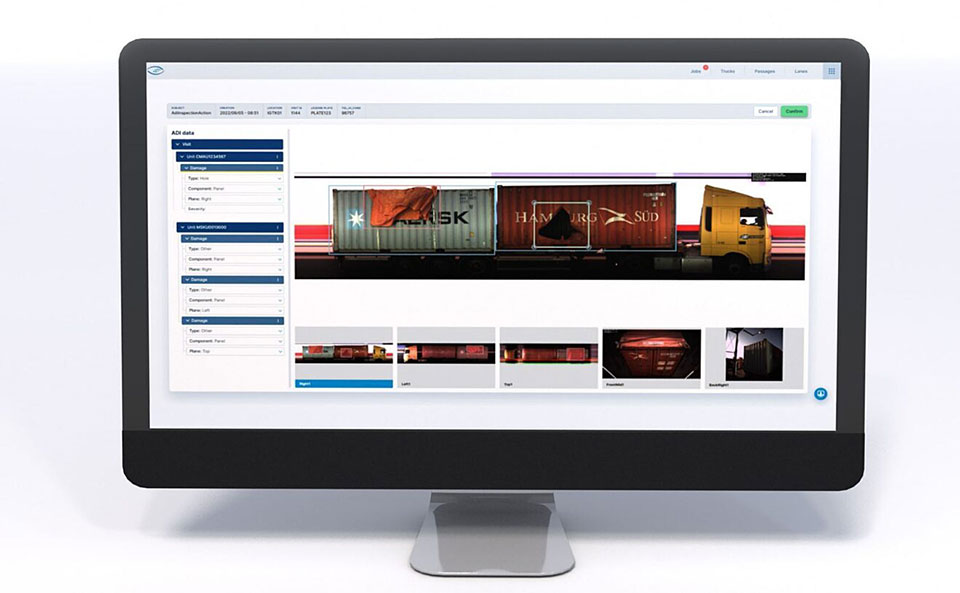
Automated damage flagging
The Argus ADI system automatically scans container images for multiple types of damage.
Focus on critical issues without slowing down the gate
Argus ADI can be configured to match each terminal’s specific priorities. The system automatically flags severe damages for immediate action, while minor issues are stored for later review. Nothing is lost, as every image is archived in The Bridge for detailed inspection and efficient claims handling.
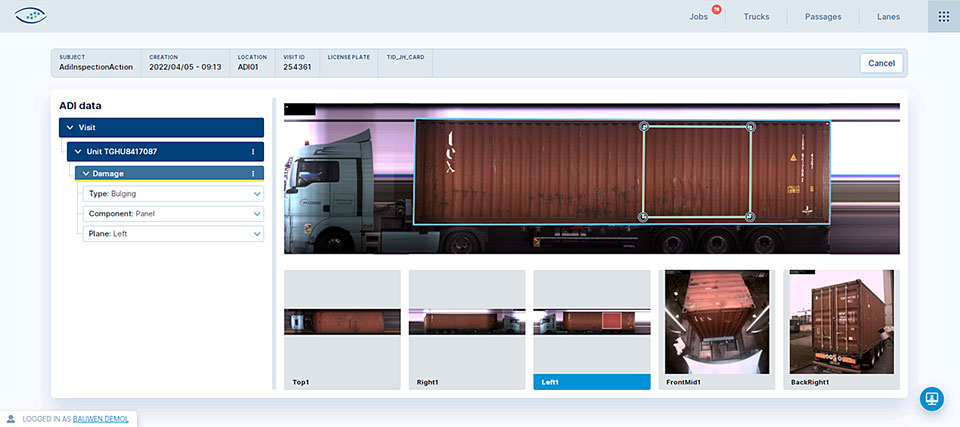
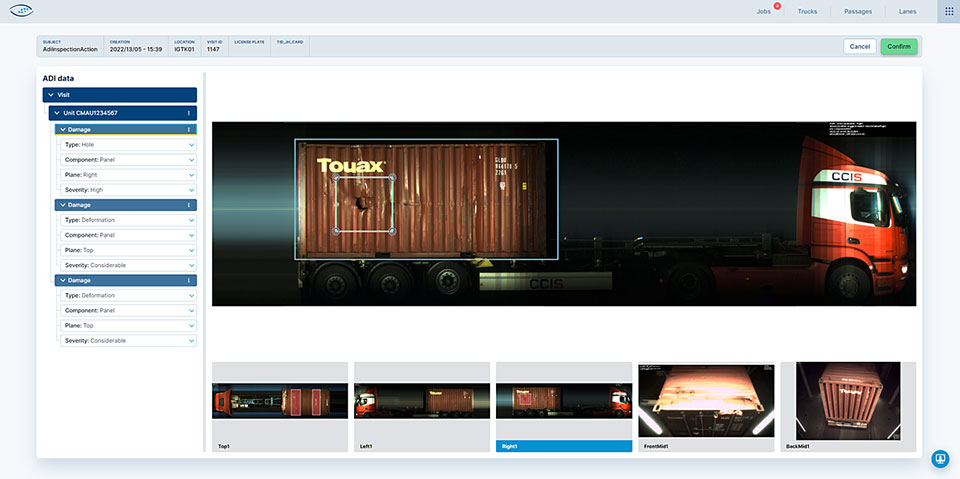
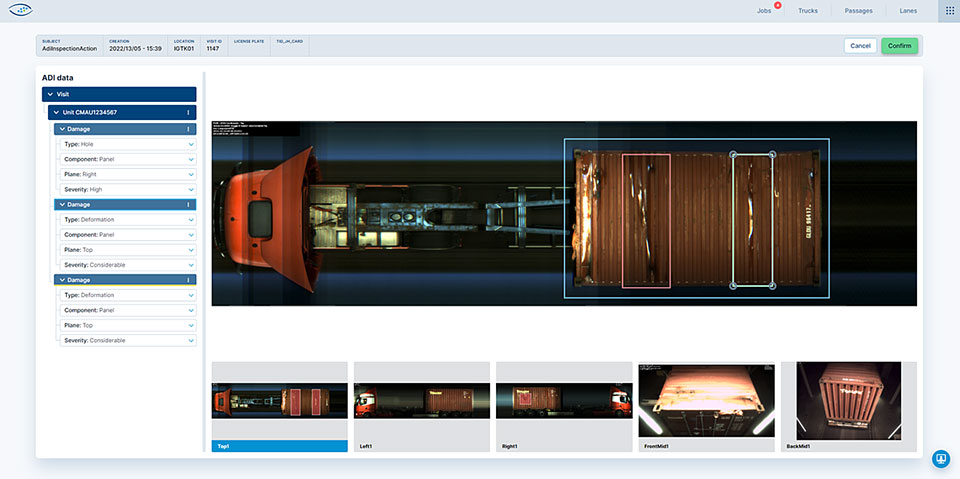
Boosting safety, efficiency, and claims handling
Frequently Asked Questions about Automated Damage Inspection ADI
Condition documentation captured at gate-in establishes baseline integrity, intermediate inspections track deterioration during yard dwell, gate-out verification confirms condition at departure, and complete visual histories support insurance claims, regulatory compliance audits, carrier performance management, and equipment maintenance scheduling throughout container supply chain journey.
Parallel processing architecture handles multiple simultaneous inspections, distributed image analysis clusters, cloud-based AI model updates, configurable inspection profiles for different container types/carriers, and integration with dynamic gate lane assignments maintaining throughput performance during peak vessel operations or seasonal volume surges.
Configurable dashboards track damage type frequency, carrier performance benchmarking, seasonal trend analysis, equipment condition deterioration patterns, compliance reporting for insurance/regulatory requirements, ROI calculations from reduced disputes, and predictive maintenance recommendations based on systematic condition monitoring across container populations.
Objective timestamped imagery with standardized defect classification eliminates “he said/she said” disputes between carriers, terminals, and shippers while automated report generation, digital carrier sign-off workflows, exception photo zoom capabilities, and integrated measurement tools accelerate resolution timelines from days to immediate gate transaction completion.
Multi-spectrum camera arrays capture visible light, infrared thermal imaging, and UV fluorescence detection across under-vehicle, side-profile, overhead, and seal close-up perspectives with automated lighting compensation, motion compensation stabilization, sequential frame analysis, and 360° coverage ensuring comprehensive condition documentation under all environmental conditions.
Real-time image capture synchronized with gate transactions automatically links inspection results to specific containers/trucks, generates categorized digital reports, triggers carrier acknowledgment workflows, updates TOS container condition status, routes exceptions to supervisors, and maintains complete visual audit trails accessible throughout container lifecycle management.
Machine learning models identify dents/deformations, contamination/staining, structural cracks/weld failures, seal tampering/breaches, chassis corrosion/fatigue, graffiti/markings, hazardous material residue, door misalignment/gasketing issues, and mechanical component wear providing comprehensive condition reporting beyond human visual inspection capabilities.
ADI systematically captures high-resolution imagery of container exteriors, under-vehicle areas, chassis components, and seal conditions using multi-angle camera arrays and AI-powered computer vision delivering objective damage documentation that eliminates subjective visual assessments and provides standardized defect classification across gate transactions.
