Technology as a lever for intermodal success
How DUSS and Camco Technologies digitalised the cologne terminal – creating a blueprint for the future. DUSS – short for Deutsche Umschlaggesellschaft Schiene-Straße MBH – is a well-established name in Germany’s intermodal rail freight sector. With 23 terminals spread across the country and around two million transshipments per year, the company provides a significant portion of the transfer capacity for combined road-rail transport. Duss plays a central role both within Germany and across international freight routes throughout Europe and beyond.
At major DUSS terminals such as Munich, Cologne, Hamburg, and Basel, numerous connections come together, generating strong network effects and securing DUSS’s position in Europe’s logistics hinterland. “This scale inevitably brings complexity,” says Jürgen Karl, digitalisation project manager at DUSS. “Due to the high number of transshipments alone, we can no longer rely on manual processes. Standardisation and digitalisation have become essential to ensure continuity and quality.”
Cologne as a technology flagship
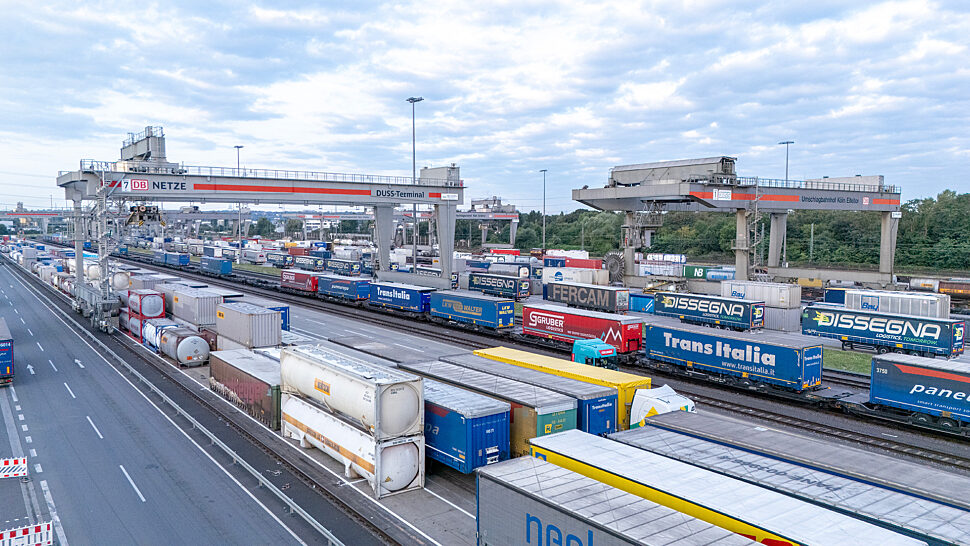
As part of DUSS’s digitalisation strategy, the Cologne terminal was assigned a key role. One of the network’s largest and busiest locations, it was selected as the site for an ambitious modernisation programme. And that choice was far from random.
“Cologne is both complex and representative,” Jürgen explains. “We serve a wide variety of customers and loading units there – which means a wide variety of processes. If you can implement a robust and high-performing system here, you know it will work elsewhere too.”
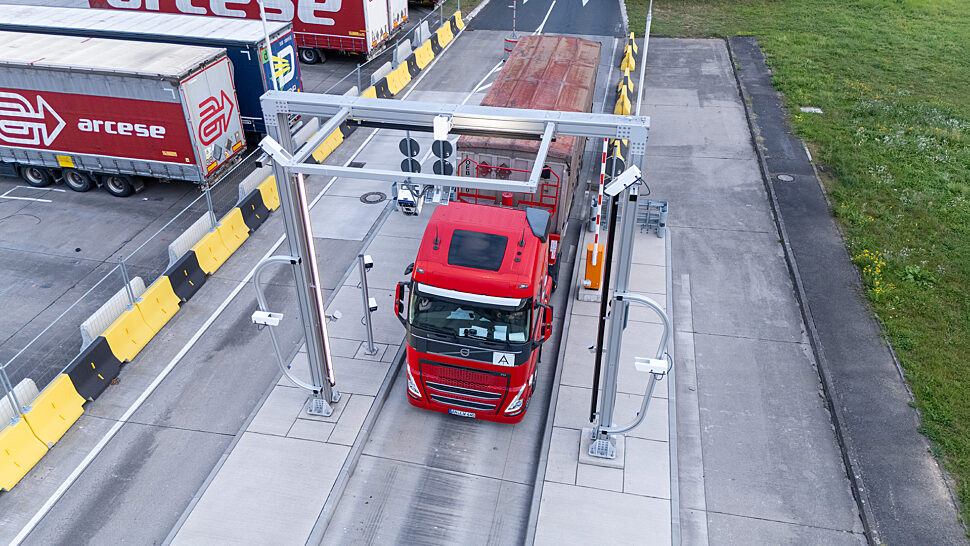
Cologne’s digital journey started back in the early 2000s, with infrastructure expansion and the introduction of the first OCR solutions. In 2017, paper-based checkins were replaced by a digital system. The current project, launched in 2021, marked another major milestone: the complete modernisation of the gate area, including OCR portals, LMS sensors, barrier control, traffic management, and seamless integration with the terminal operating system.
“We deliberately chose Camco Technologies because they could deliver a complete concept,” says Jürgen. “Their technology had already proven itself in demanding port environments. Just as important: they had the experience and the commitment to actually bring the project to life.”
In an increasingly automated logistics system, terminals must evolve into digital nodes within a broader ecosystem. No one can do that alone.
Who is Jürgen Karl?
Jürgen Karl has been with Deutsche Umschlaggesellschaft Schiene-Straße (DUSS) for 25 years and has grown alongside Germany’s intermodal transport sector. After studying business administration with a specialisation in logistics, he joined the then-emerging combined transport segment in 2000. At DUSS, he found the ideal mix of technology, process-oriented thinking, and societal relevance – three elements that continue to motivate him today.
As digitalisation project manager, Jürgen develops solutions to facilitate the shift from road to rail. His focus is on efficient processes – not just for trains, but also for the trucks that deliver and collect intermodal loading units. He keeps a close eye on the entire chain – from planning to on-the-ground operations.
Smart details make the difference
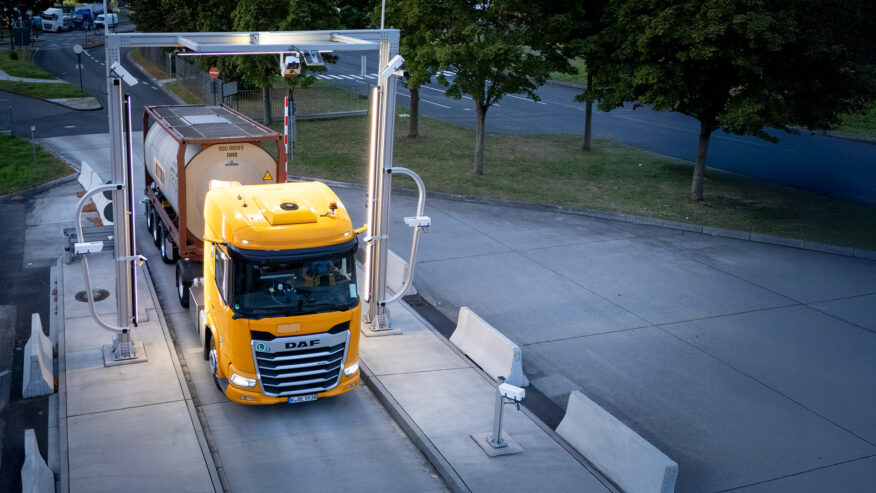
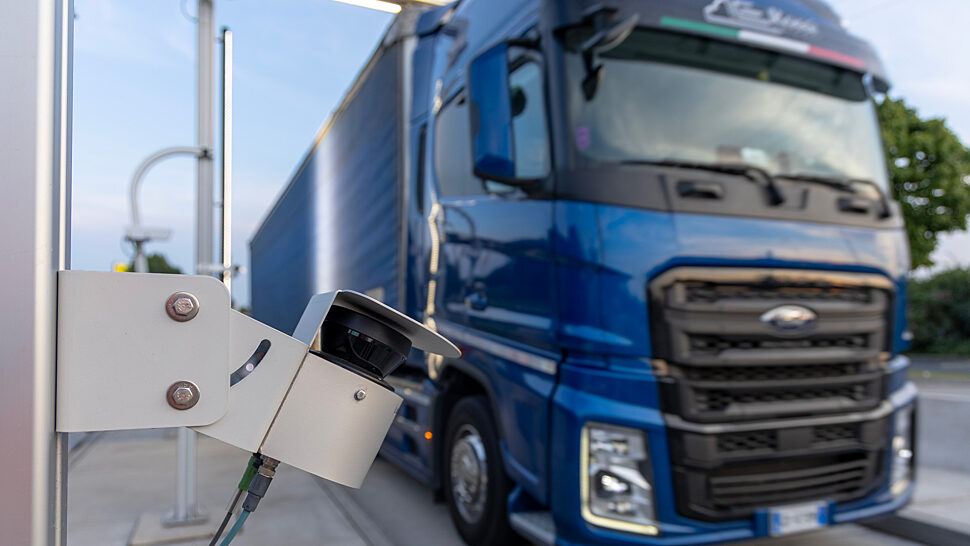
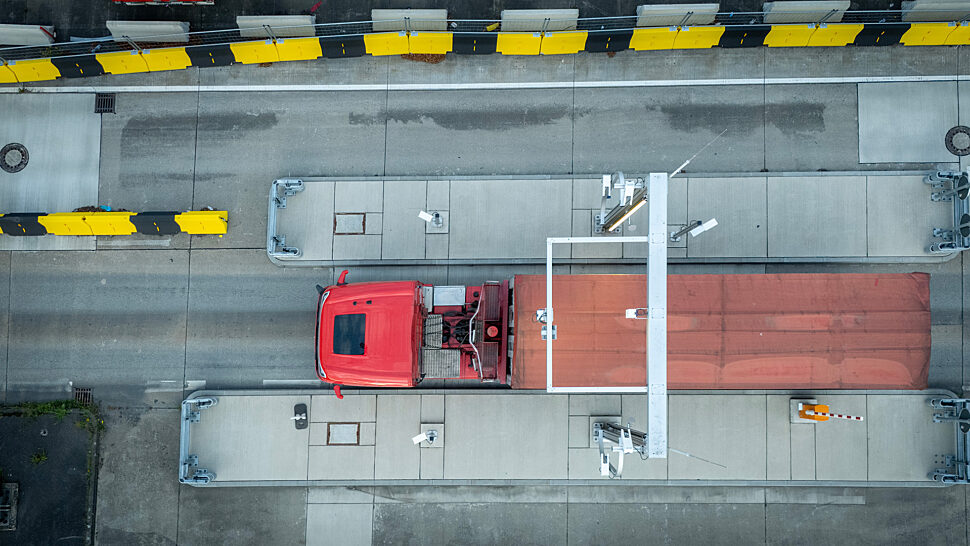
The installation in Cologne is technically advanced and includes some standout features. The OCR portals are equipped with additional 45° cameras, allowing optimal reading of tank container IDs. “These are crucial,” says Jürgen. “On cylindrical containers, the ID is often placed high on the curve. From a side angle, it’s hard to read. The tilted cameras solve that issue.” The cameras can also inspect the roofs of loading units – useful for detecting damage or irregularities before transshipment.
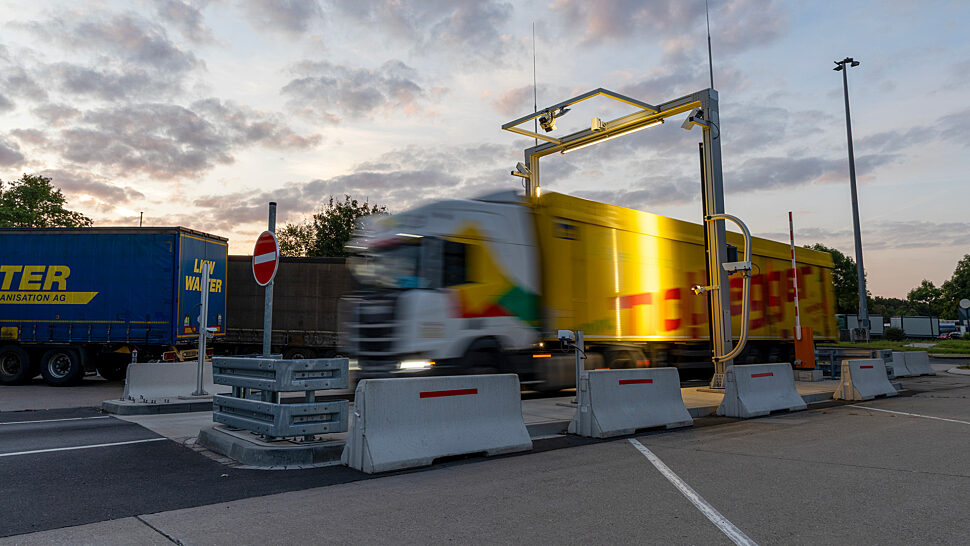
The LMS sensors play a key role as well. They monitor in real time whether vehicles are correctly positioned within the video gate and regulate traffic and barrier control accordingly. “There must be no double detection. The sensors ensure vehicles are admitted one at a time, maintaining data quality and preventing congestion.”
The project was executed in phases – right in the middle of daily operations with an average of 900 vehicles per day. “That demanded a lot of flexibility and mutual understanding,” says Jürgen. “We also renewed cables and rearranged lanes to make optimal use of the available space.”
A clearer view of reality
According to Jürgen, the impact on operations is significant. “Processing is faster and more streamlined. Drivers are recognised automatically, and checks are completed within seconds.”
But it’s the improved transparency that makes the biggest difference. “We can now map out error-prone processes and recurring patterns far more effectively. Ideally, all we have are ‘happy flows’ – uninterrupted, accurate processes and data streams.”
With Camco’s analytics tools – such as the Reporting and Archive modules within THE BRIDGE, the technology- and terminal independent unified platform – DUSS can now also trace cause-and-effect relationships behind errors. “That’s valuable for everyone involved: our staff, customers, drivers, and management.”
Feedback from the field has been overwhelmingly positive. “Of course, with any new technology, there are questions and adjustment periods. But the system brings more calm, fewer manual actions, and better predictability. The key is that both hardware and software are reliable – and issues are quickly resolved.”
We deliberately chose Camco Technologies because they could deliver a complete concept. Their technology had already proven itself in demanding port environments.
What DUSS represents in Germany and Europe
Deutsche Umschlaggesellschaft Schiene-Straße mbH (DUSS) is one of the most important players in Germany’s intermodal transport landscape, acting as a vital link between road and rail freight systems. Its role is not just about managing cargo movements—it’s about enabling efficient, sustainable, and scalable logistics in a country that sits at the crossroads of European trade routes.
DUSS serves as a national infrastructure operator of intermodal terminals—those crucial hubs where containers and semi-trailers switch between trains and trucks. With over 20 full-service terminals across Germany, including in cities like Hamburg, Munich, Frankfurt, and Duisburg, the company ensures that the flow of goods continues smoothly between inland regions, major ports, and international borders.
Germany is central to European freight traffic—and DUSS terminals are often the first or last mile connection in cross-border intermodal transport. Several of its terminals, like those in Basel-Weil am Rhein, are positioned to connect with Switzerland, France, Italy, and beyond. This makes DUSS a key node in the Trans-European Transport Network (TEN-T) and Alpine corridor initiatives.
A model for the future
The experiences in Cologne are now shaping DUSS’s broader digitalisation strategy. “Not every terminal is as large or complex,” Jürgen notes. “So, we always analyse what each location truly needs – and what can be added in a future phase.”
For new construction projects, insights from Cologne provide a valuable foundation. “We can already account for data flows, identification needs, camera positioning, and traffic during the layout phase. And we build everything modularly – expansion remains possible.”
OCR remains the preferred solution for ID recognition. “We work with an enormous variety of loading units – from different generations and in various conditions. OCR is currently the most effective way to process all that information accurately and quickly.”
Still, DUSS closely monitors technological developments. “There’s a lot of research into alternative recognition methods. But compatibility, cost-efficiency, and robustness remain our guiding principles.”
Partnership as the key to success
The collaboration with Camco has now led to rollouts at eight locations. “What I appreciate is the open dialogue, regular alignment, and joint evaluations,” says Jürgen. “We’ve formed a dedicated team that now acts as a catalyst within our organisation.”
That foundation of trust is essential. “Technology projects aren’t just about software and hardware. They also have to make human sense. Staff will only accept what is technically sound, user-friendly, and reliable. That requires a partner who not only delivers products but also contributes to implementation, maintenance, and longterm development.”
Sustainability is also a focus. “We don’t want solutions that are outdated after two years. Our industry needs stability – including in terms of service and support.”
In the coming years, DUSS aims to further expand its network, harmonise supporting systems, strengthen broadband connectivity, and introduce IT infrastructure redundancy.
Toward a digital terminal network
Digitalisation at DUSS doesn’t happen in isolation. The company has developed a strategic IT vision encompassing all goals and priorities. “We want to move away from standalone solutions and isolated systems, towards a platform-based approach,” Jürgen explains. “And for video gates, that’s already largely in place.”
In the coming years, DUSS aims to further expand its network, harmonise supporting systems, strengthen broadband connectivity, and introduce IT infrastructure redundancy.
And in five years? “We’ll have largely digital handling processes at all our terminals, and we’ll be testing autonomous crane systems. But we’re taking it one step at a time – with a focus on reliability, safety, and integration.”
In an increasingly automated logistics landscape, terminals will no longer just be transshipment hubs, but digital nodes in a wider ecosystem. “And that’s exactly why collaboration is essential. No one can do this alone. The success of a digital network depends on the willingness to connect, to share – and to build together what truly works.”