
Upfront truck planning for predictable gate flow
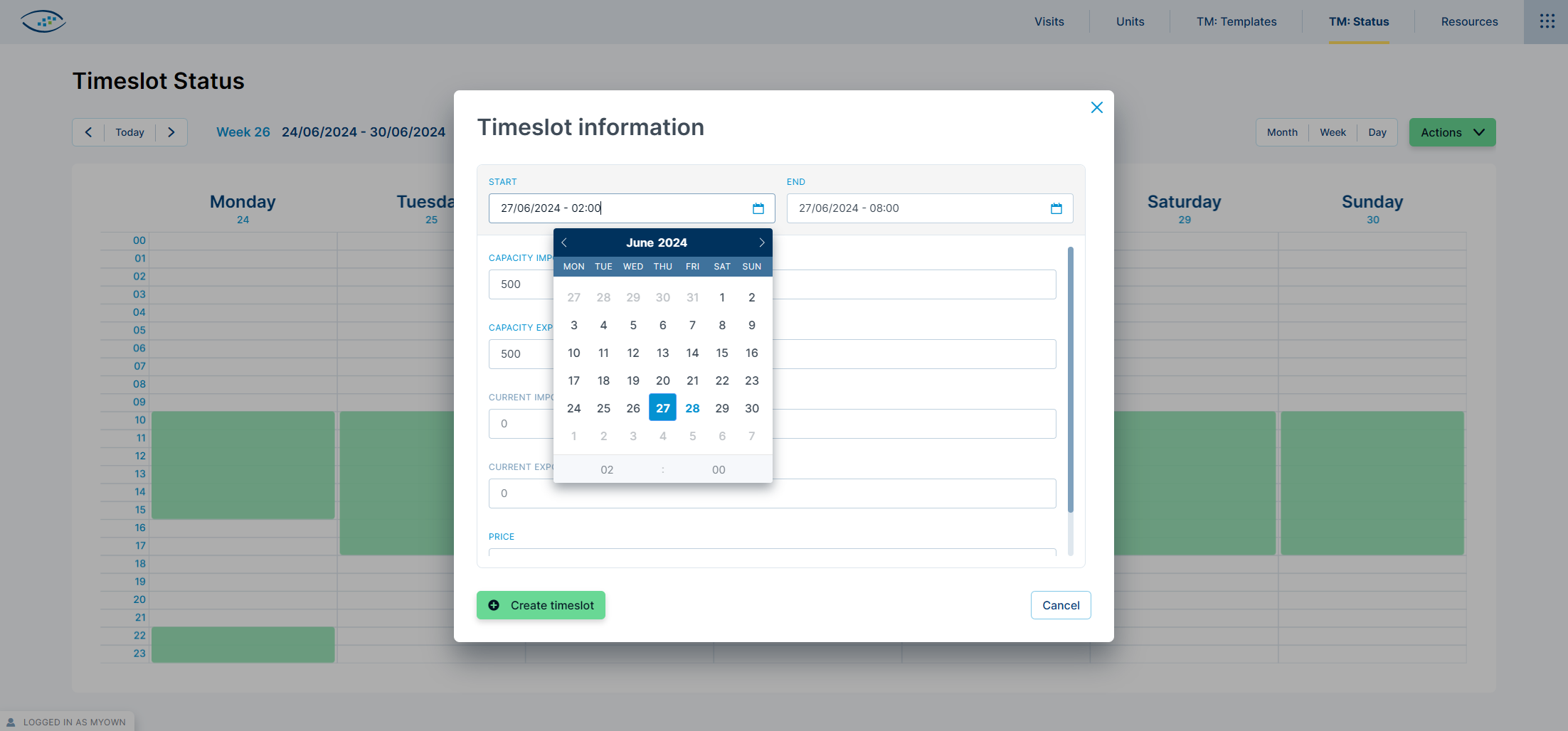
While a VBS is often viewed as a tool to manage gate and yard traffic peaks, its capabilities go far beyond that. Camco’s truck app is more than just a visit appointment system — it provides a user-friendly interface that allows trucking companies and drivers to complete many gate processes before arriving at the terminal. In fact, many installations don’t even use time slot functionality. By handling multiple gate processes in advance, gate throughput increases significantly, and queuing typically occurs only when the yard cannot keep pace.
Deep integration with terminal systems
The VBS is tightly integrated with the Terminal Operating System (TOS) and Camco’s Gate Operating System (GOS). This integration resolves numerous potential issues before the truck arrives, streamlining the entire access process.
With extended TOS interfaces, this truck app can be even more tightly embedded into yard processes, helping optimize yard resources needed to handle external trucks.
Tailored implementation for every terminal
Setting up a truck app may seem straightforward — focused on time slot management — but in practice it is far more complex. Each terminal has unique requirements tied to its specific gate workflow, meaning there is no universal standard for implementation. As a result, all booking logic and process checks within the VBS must be tailored to each terminal’s needs.
Keeping customization under control
To minimize implementation costs and avoid excessive customization, Camco includes a “question flow system” within the VBS platform. This truck app, customized for each terminal, guides trucking companies through creating visit appointments and unit bookings, ensuring all terminal-specific requirements are met.
The question flow is developed collaboratively by Camco business analysts and the customer, and is implemented using as many standard components as possible to keep the system efficient and maintainable.
Camco VBS is a module of THE BRIDGE and provides both a web interface and a smartphone app.
How it works
Truck visit data is collected before arrival.
When the truck reaches the OCR portal:
- The driver or license plate is recognized
- A smartphone barcode can also be used as reference
- Booking information is retrieved instantly
- The kiosk workflow is pre-filled and nearly complete
Gate processing becomes faster, cleaner and far less dependent on manual input.
Operational impact
- Flattened or controlled peaks during busy hours
- Higher gate throughput with fewer interventions
- Fewer trouble tickets and exceptions
- Better predictability for yard and crane operations
VBS doesn’t replace the gate.
It removes uncertainty before the gate.
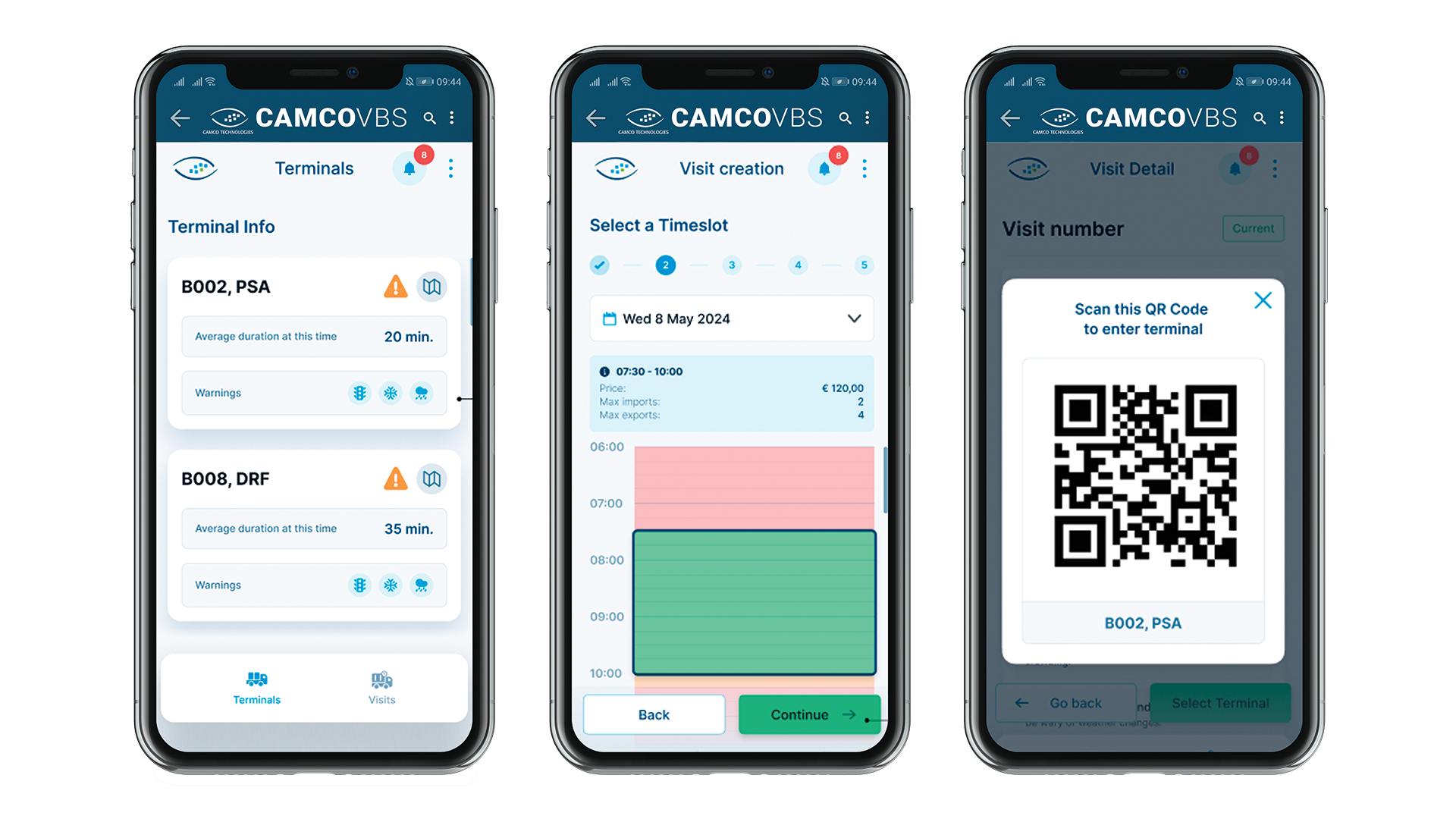
Mobile app for drivers
The VBS mobile truck app allows drivers to:
- Make, check and change appointments
- Complete missing information beforehand
- Receive alerts or instructions en route
- Receive yard routing directions
- Receive digital EIR
- Operate across multiple terminals
- Support ITT (Inter Terminal Transfer)
This reduces waiting times and prevents wasted trips.
Benefits for each stakeholder
Why it works
VBS does not introduce complexity.
As a truck app, it brings clarity and rhythm to the existing operation.
Pre-announcement → fewer decisions at the gate → smoother movement → lower friction.
Frequently Asked Questions about Vehicle Booking System VBS
Multi-terminal management supports centralized booking across terminal networks, location-specific slot rules, cross-terminal container transfers, unified carrier accounts, aggregated reporting across facilities, and group-level capacity allocation providing enterprise-wide visibility and optimization for operators managing multiple container handling locations.
Comprehensive utilization analytics track slot fill-rates, no-show percentages, carrier compliance scoring, peak demand forecasting, turn-time benchmarking, appointment pattern trend analysis, demurrage exposure reporting, and capacity planning recommendations supporting data-driven slot configuration and terminal access policy optimization.
Bidirectional TOS synchronization validates booking eligibility against container availability, generates corresponding yard work orders upon arrival confirmation, updates master container records with booking details, triggers equipment dispatch coordination, handles booking-related exceptions, and feeds arrival pattern analytics into terminal capacity planning models.
Driver mobile app delivers GPS-guided arrival instructions, real-time queue position updates, digital gate pass generation, appointment modification requests, documentation status tracking, exception photo upload, estimated wait-time predictions, and post-gate survey feedback enabling proactive communication throughout the complete gate transaction experience.
Pre-validation of container bookings against appointments, real-time queue position updates, mobile app notifications for arrival timing, automated documentation pre-processing, prioritized lane assignment based on booking compliance, and dynamic no-show slot reallocation collectively minimize truck dwell time at gates improving overall terminal velocity.
Intelligent slotting algorithms consider container type/size, pickup/delivery timing windows, yard staging requirements, equipment availability, crane scheduling constraints, rail/barge cut-off deadlines, and historical carrier performance to assign optimal appointment times maximizing terminal throughput while accommodating legitimate customer time requirements.
Carrier portal integration supports direct booking from TMS platforms, real-time slot availability display, automated appointment confirmation, digital documentation upload, carrier performance scoring, demurrage calculation transparency, and exception handling workflows creating seamless collaboration between trucking companies and terminal operations teams.
VBS enables carriers and terminal customers to pre-book truck/container gate appointments online reducing gate congestion, optimizing appointment slotting, improving truck turn-times, minimizing empty runs, and providing terminals with predictable arrival volumes essential for efficient yard planning and equipment deployment coordination.
